Anatomy of the Musician · Technique and Performance
Cello and Double Bass
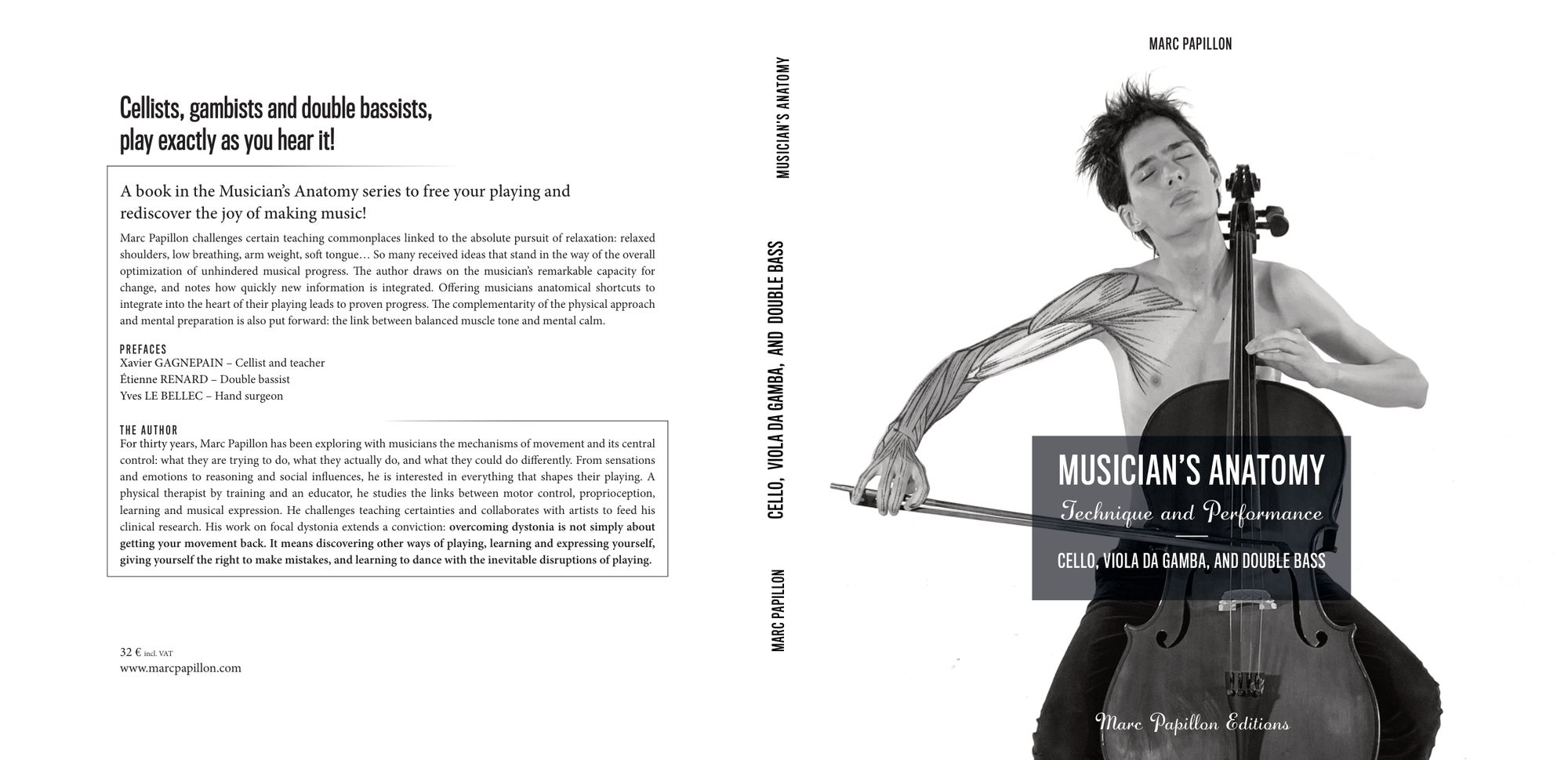
Illustrated book, 218 pages.
Marc Papillon Éditions – 2021
The book

It all starts with an idea. Perhaps you want to join an orchestra. Perhaps you want to take your playing to a whole new level.
Visualize and feel more clearly
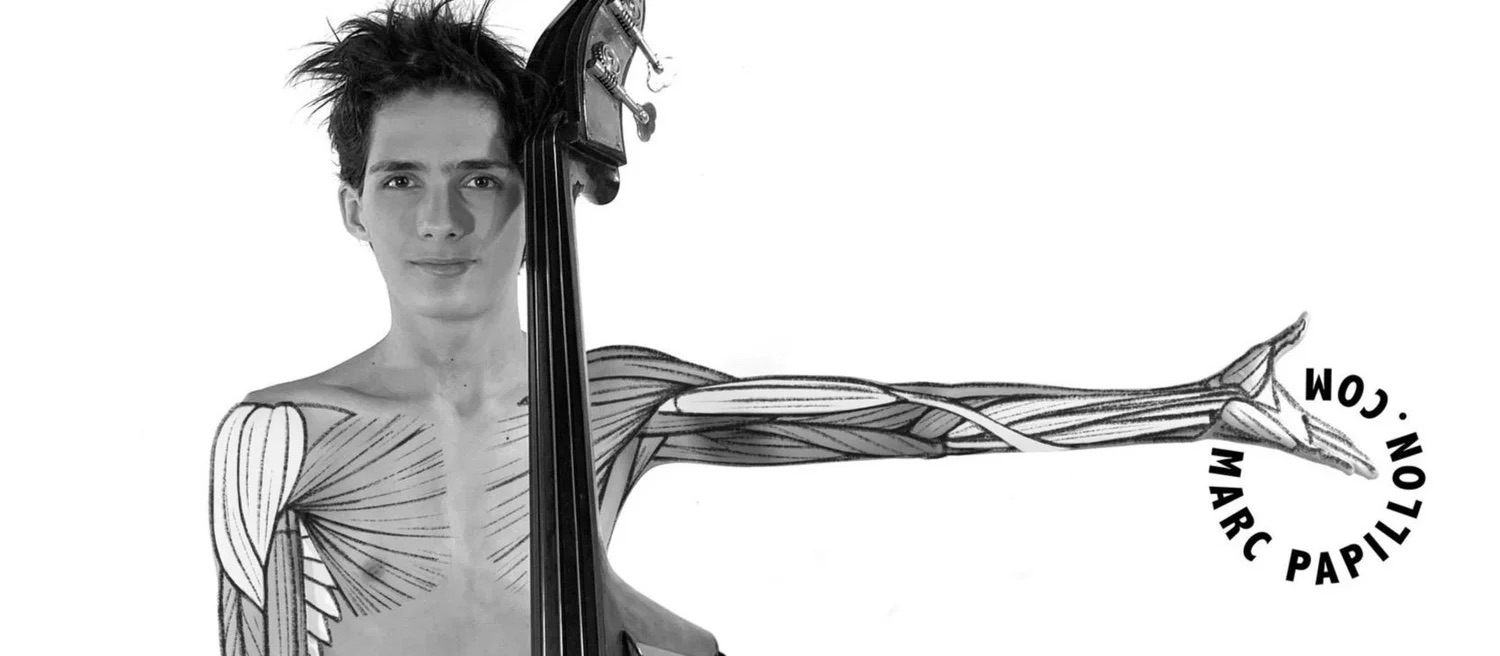
Functional anatomy at the heart of your technique, in the service of music!
Foreword by Xavier Gagnepain
Musician, teacher and conductor
For musicians, the essential tool is undeniably, and always will be, the ear. It is through the ear that they shape the inner song that serves as their model of sound. It is thanks to the ear that they can judge the quality of what they produce. And it is the ear that checks that the original intention is faithfully reproduced.
It is therefore an illusion to hope that the quality of a movement or the perfection of a posture can, on their own, create the beauty of a sound or of an interpretation. Without the ear that dreams, without the ear that monitors, the body is powerless.
But the ear would be quite wrong to think itself all-powerful. By neglecting knowledge of the body and how it works, musicians deprive themselves of the most direct means of reaching their goal. Above all, they run a major risk: that of damaging, temporarily or even irreparably, the very tool they need so much for their artistic ambitions.
Having made decisive changes myself in my approach to posture and in my understanding of my movements, I now realize how right I was to take an interest in the musician’s biomechanics and to seek out those who study this question.
As a cellist, as a teacher and as a conductor, I cannot recommend strongly enough that my colleagues and students give it their full attention in turn. Their intuition alone, or the advice received from their teachers, is not enough. A well-founded knowledge of what is at stake for the body can spare them problems that hours of practice often fail to solve, or sometimes even make worse…
When a movement is part of a harmonious process, it has every chance of translating into far greater efficiency on the instrument. It then brings real improvements in sound production and makes virtuosity much easier, leading to that sense of ease so sought after on stage, which I like to call the choreography of ease.
Xavier Gagnepain – Cellist and teacher
Foreword by Yves Le Bellec
Hand surgeon for musicians
After the success of the first two volumes of Anatomy of the Musician, devoted to the violin and viola for the first and to wind instruments (trumpet, horn, trombone, tuba) for the second, the third volume was eagerly awaited. It is devoted to the study of anatomy and physiology, applied this time to playing the cello and the double bass.
This book is the work of an enthusiast. Marc Papillon loves music and the arts in general, and he loves the musicians he has worked with for years as a physiotherapist.
Like every enthusiast, he loves to pass on what he knows. He does so at the many conferences in which he takes an active part, and through the training courses and workshops he regularly runs in France and abroad. This new book reflects that commitment to passing on knowledge and to teaching for musicians. Musicians know the anatomy of their instrument perfectly, how it works, and all the technical subtleties that draw from it the most beautiful sounds, nuances and colors. But a musician’s first instrument is their own body, the one through which they will be able to use their musical instrument (Aristotle said that the hand is the instrument of instruments).
And very often, musicians do not know this body, which is nonetheless one of their most precious assets. Yet to use this body optimally, to preserve it and not “wear it out” prematurely, knowing the basics of anatomy and understanding physiology are a necessity.
With this book, Marc Papillon enables cellists and double bassists (professionals, amateurs and teachers) to acquire the knowledge they need to build movements that are as ergonomic as possible and as respectful as possible of anatomy and physiology. Only at this price, the price of knowing the body, can the risks of playing-related disorders (tendinopathies, misuse syndromes, overuse syndromes and other occupational conditions) be avoided.
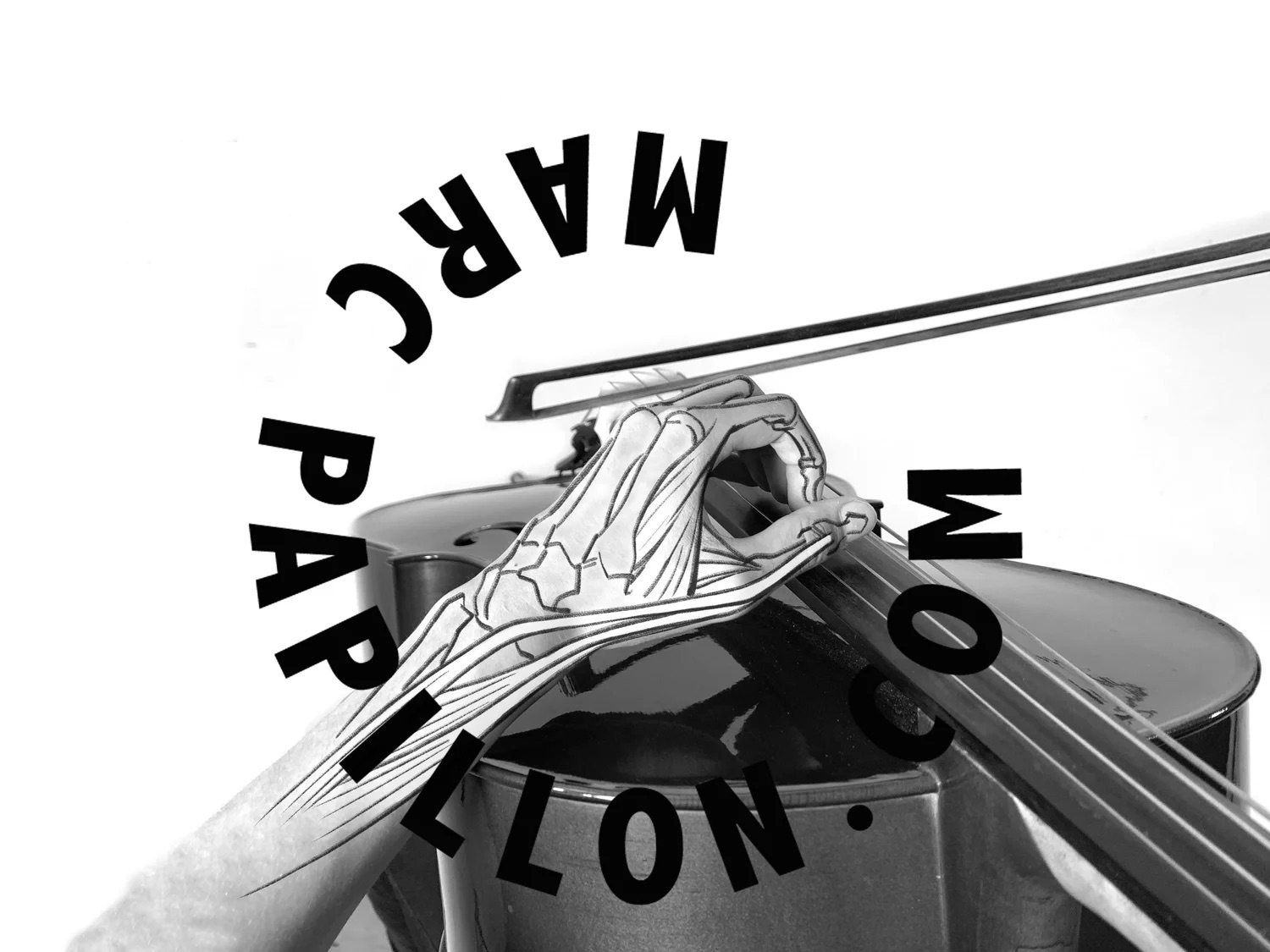
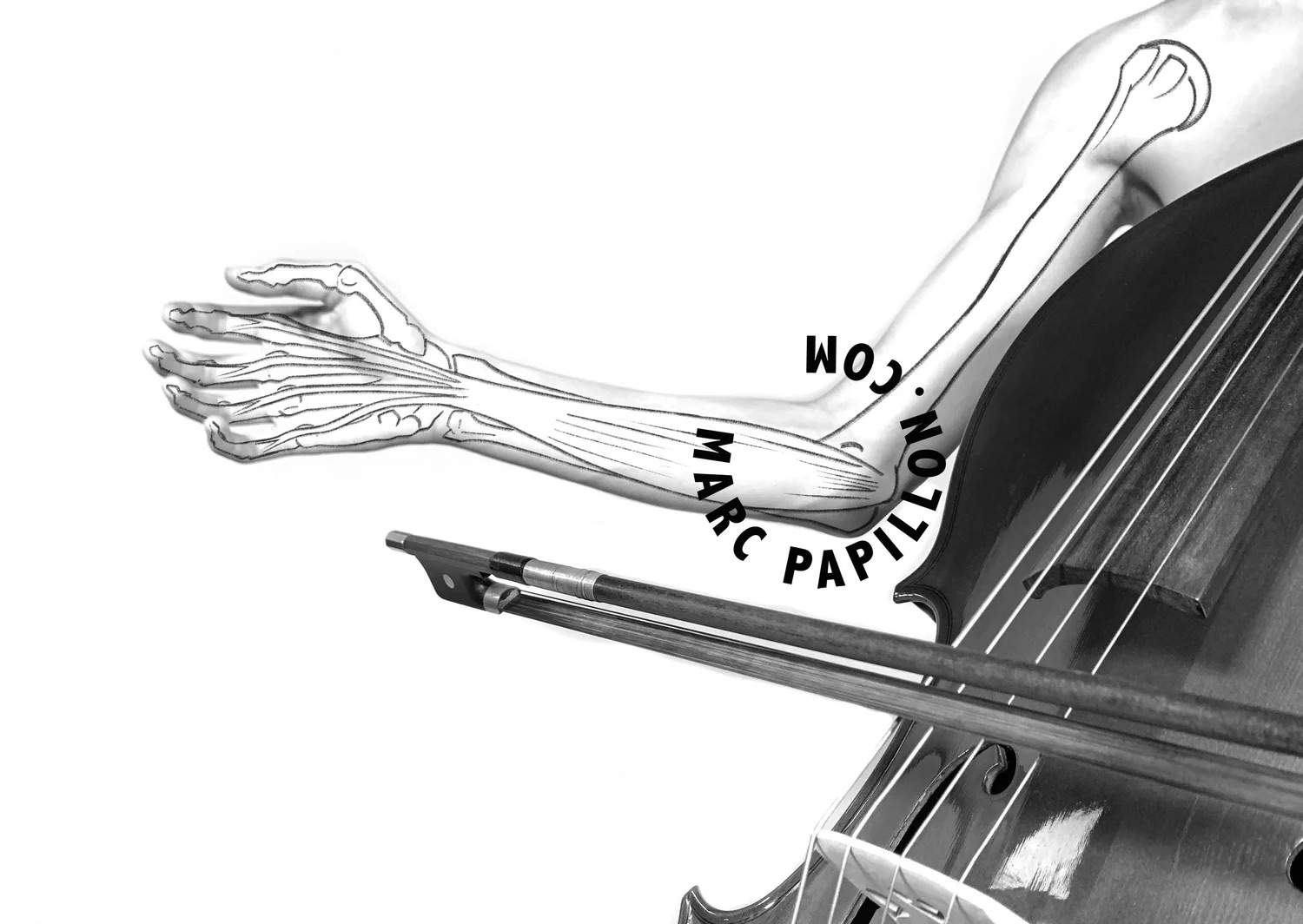
After violinists and violists, after wind players, cellists and double bassists are now lucky enough to have a highly educational book that gives them the knowledge essential to understanding instrumental movement. Each concept is explained very clearly; each page of text faces a very clear page of illustration combining photograph and drawing. Therapists, and physiotherapists in particular, will also find in this book a great many useful keys for treating their musician patients.
Let us hope that other instrumentalists will soon benefit from further volumes!
Yves Le Bellec – Hand surgeon
Foreword by Étienne Renard
Musician – Double bassist
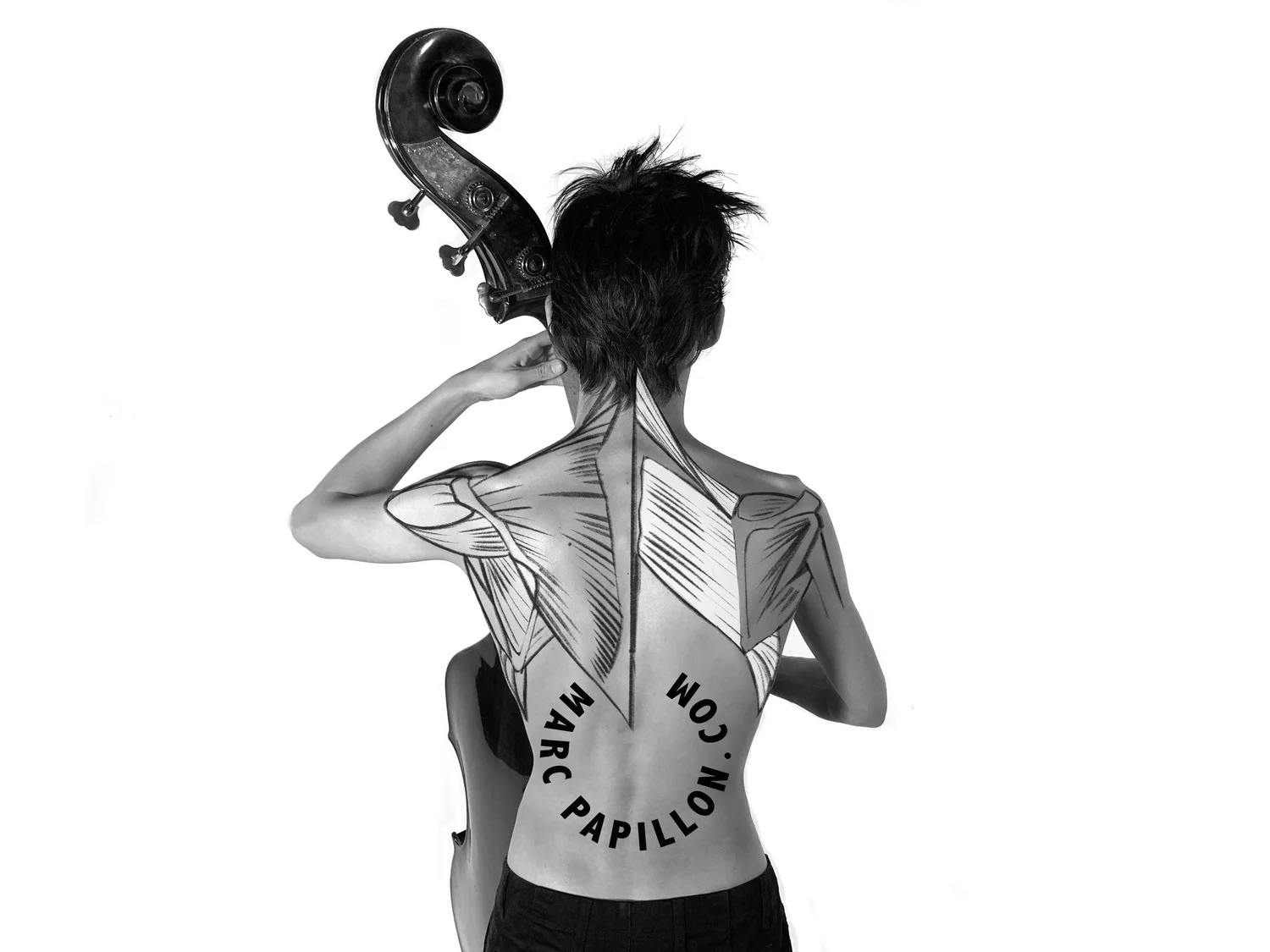
As an improviser, I have always tried to be as free as possible in the music I play. I have always worked toward this, seeking to develop my musical ear so as to free it from any blocks.
Yet during my practice sessions, alone or with a band, it became clear to me that the ear alone did not have the power to free my musical speech. The body also had its say. So I began to observe it while playing, and I tried to understand it.
Why were some movements on the instrument harder than others, even though I was trying to apply what my teachers had taught me?
How was it that I had reached a fairly high technical level, able to play very demanding phrases and/or at fast tempos, while some phrases in a supposedly accessible register of the instrument were harder to play perfectly?
My body turned out to be essential to my perception of tempo, to intonation, to endurance and to work on sound.
I realized that an empirical study of my physical behavior while playing was not enough. I needed a technical understanding of how my muscles, my joints, my breathing work… to finally remove the last obstacles to the freedom I seek on this so demanding instrument!
Étienne Renard – Double bassist
Order the book
Anatomy of the Musician
Illustrated book, 218 pages.
Marc Papillon Éditions – 2021