Anatomy of the Musician · Technique and Performance
Voice and Beatbox
Illustrated book, 290 pages.
Marc Papillon Éditions – 2022

The book
It all starts with an idea. Perhaps you want to join an existing band or start a new ensemble? Perhaps you want to take your playing to a whole new level?
Take a fresh look at each of the systems involved, so that you can then use them together with ease:
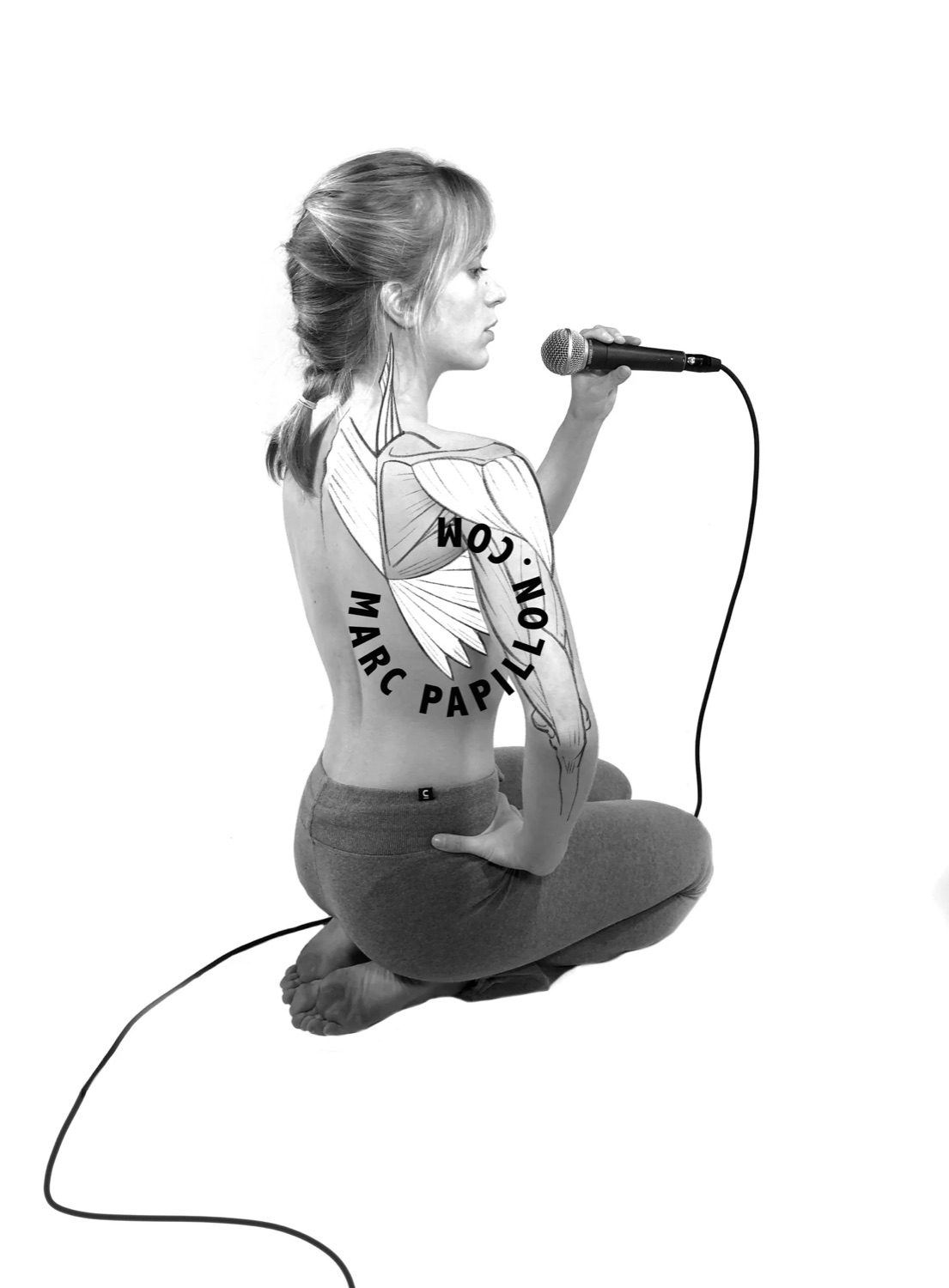
- Vertical axis system: from the feet to the head, by way of the pelvis and the spine
- Horizontal axis system: the shoulder girdle, made up of two shoulder blades and two collarbones
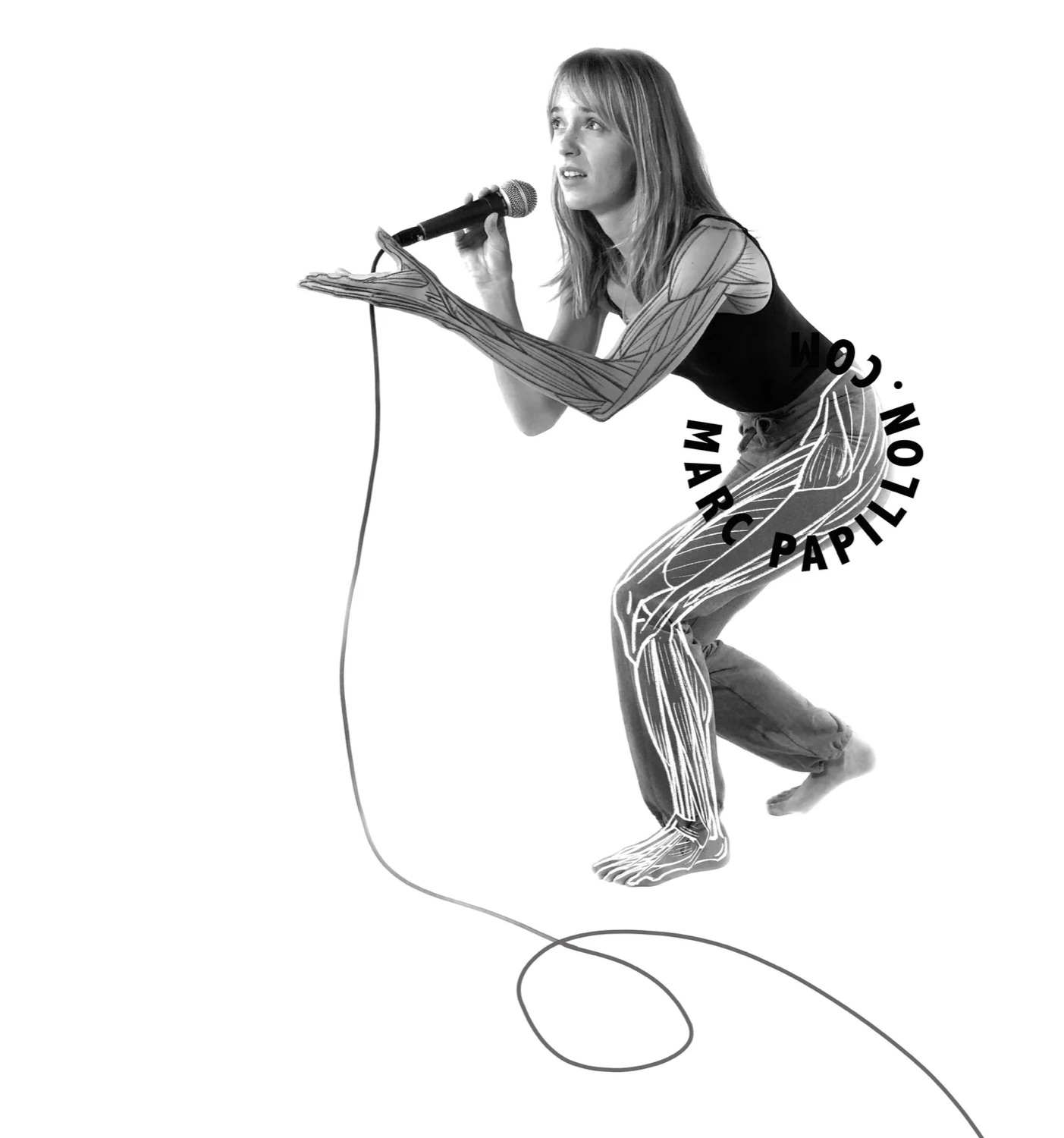
- Manual system: the arms, forearms and hands
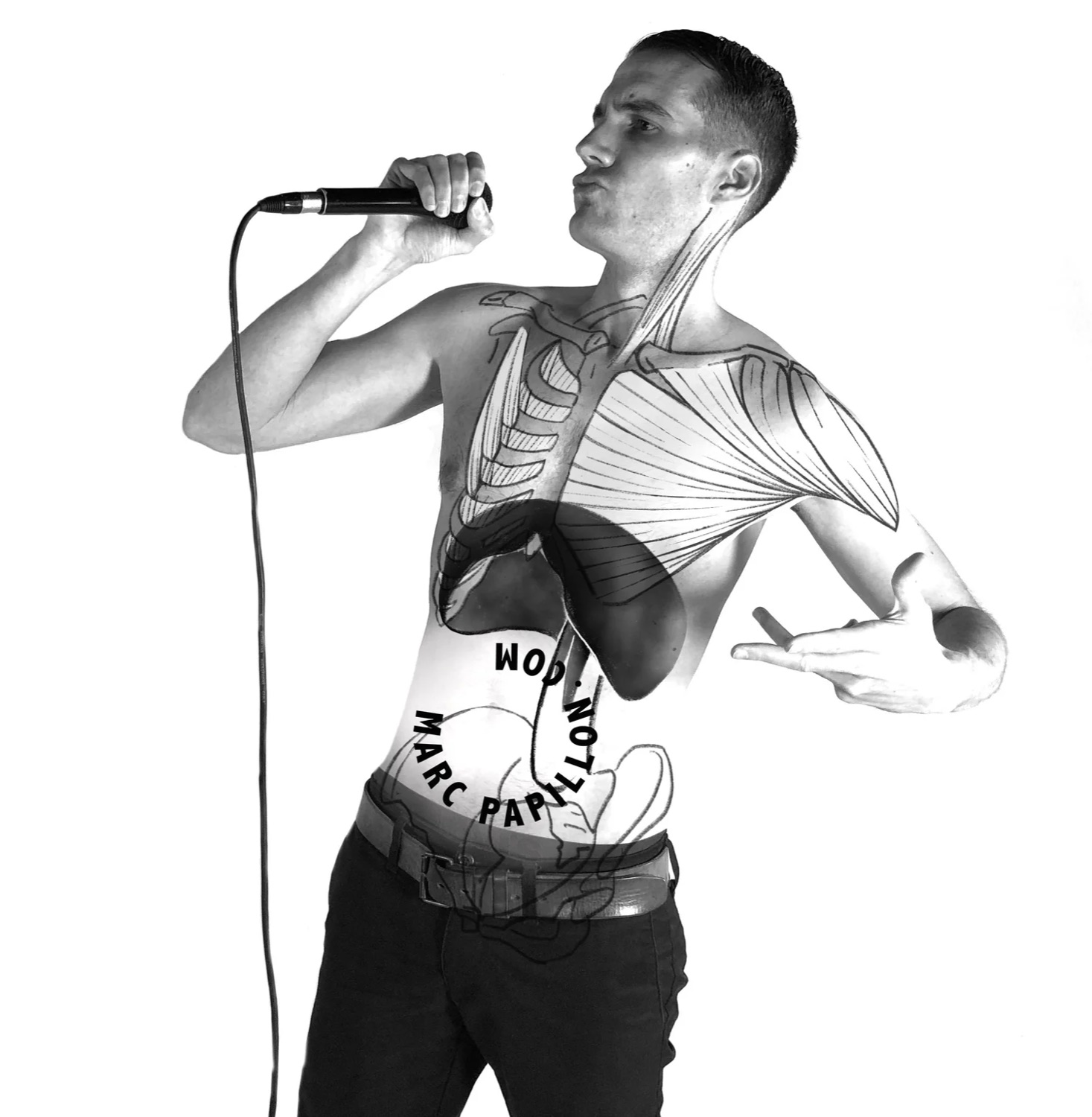
- Breathing system: the diaphragm and the pelvic floor, abdominal and gluteal muscles
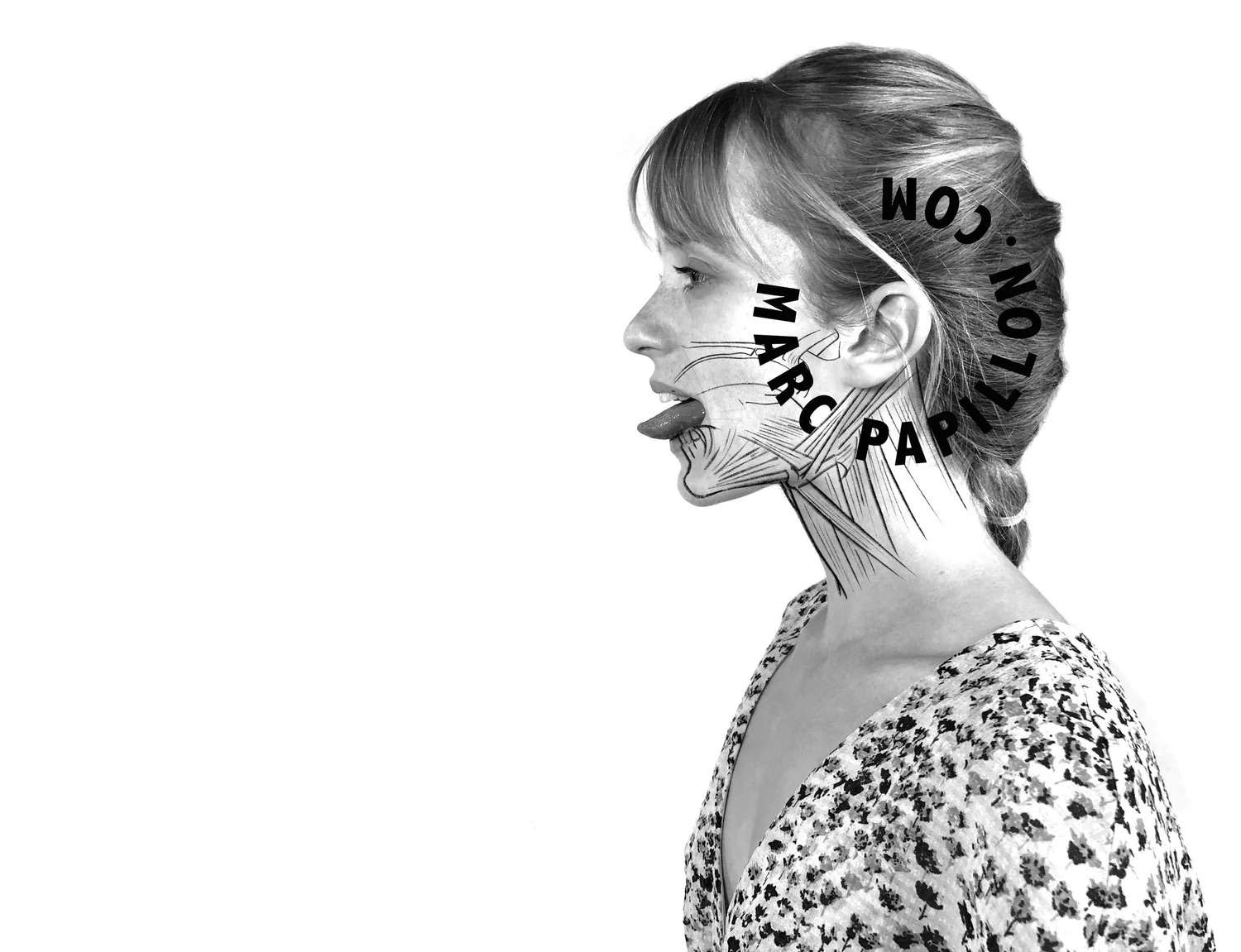
- The vibrator system: the vocal folds, located in the larynx (throat) just above the trachea
- The resonator system: the throat/pharynx and the mouth (vocal tract), soft palate
- The articulation system: the tongue
- The facial expression system: the face and the lips
- The intention system: music and artistic sense, sensitivity.
Visualize and feel more clearly
Functional anatomy at the heart of your technique, in the service of music!
Foreword by Alexinho, beatbox world champion
To me, human beatbox is full of mysteries.
Where do the sounds really come from? How are they produced? By what means? Which muscles and joints are involved?
Only a few “basic” notions are within my reach, based on what I feel physically (lips, voice, breath, tongue, etc.)
But not being an anatomist, I ask myself a lot of questions.
I am surely not the only one asking them.
My only sources of learning come from exchanges, encounters and conversations at various beatbox events.
Being part of an (underground) scene whose aim is partly just to discover new sounds, without really knowing how this machine called the body works, is for me both a question and a feat.
Indeed, the mysteries of human beatbox stem largely from our flesh, our organism, our physiognomy, and much more besides…
Yet we know very little about them.
Today’s beatboxers are true acrobats of the facial muscles.
As a result, we “performer” musicians have every interest in learning as early as possible to manage our efforts in the most appropriate way, so as to learn to conserve our energy and therefore to last over time.
This book gives us the basic keys to understanding this organic instrument that we all possess.
What can benefit vocal artists can equally benefit teachers who are keen to enrich their knowledge of how to pass on this art.
Alexinho – Beatboxer, beatbox world champion
Foreword by Nathalie Solence
Singer – Singer-songwriter
I remember the first time I went on stage to sing a song I had written, words and music. I had just turned twenty. It was love at first sight… the discovery of a space in which I immediately felt at home. In the years before, I had had the bad experience of my fingers trembling during my guitar exams. But that day, despite the stage fright, despite my heart racing in my chest, my voice did not tremble; my words and my notes were there, no fumbling, no memory lapses. A feeling of happiness, euphoria and power from the very first moments… The world could have collapsed around me; I was standing in front of an audience that was listening to me! And straight afterward, the urge to go back as soon as possible. I could say that I dived into the water and, once in the water, realized I was a fish!
Even now, the stage is a special and singular place for me. A blend of a space open to the world and a completely intimate space, where any freedom is possible. In that, it is like writing. Except that when you write you are alone with yourself, whereas on stage you find yourself alone with everyone! A place where other opposites meet, such as feeling at once “other” and “deeply oneself”.
I started singing simply to share the songs I was writing with an audience. With no technique, without having worked on my voice, my posture or my acting… And from song to song, from stage to stage, I found myself a singer…
I sing…
To dress up the gray hours / And color the sky in blue
To be in Venice in a blink / To feel the sun when it rains
And get drunk when night falls / So I’m no longer afraid of the wolf
Deep in the woods, deep in the well / For anything at all, for nothing at all…
After that, I took all sorts of classes: singing, theater, mime, clowning, interpretation… I trained myself to “move” on stage, to “speak”, to breathe, to sing! My voice played several nasty tricks on me. I saw voice doctors and speech therapists… I learned to listen to it, to feel it, to hear it tire, not to mistreat it. To master it, in a way. I also learned to know myself better, with my weaknesses and my strengths. Marc offered me a research-based work grounded in how the body functions in association with the mind and emotions.
Anatomy of the Musician. This book lives up to its title. Even so, I had no idea of the adventure that awaited me, so thrilling and so complex at the same time! Reading it is truly like setting off to discover life at the bottom of the oceans!
But beyond a description, even a dissection, beautifully illustrated page after page, beyond the phenomenal wealth of information it brings together, beyond his research and the passion he passes on to us, Marc Papillon makes us aware of the origins and repercussions of our movements; helps us understand where a particular pain comes from; and helps us adjust our stance, our movements and our breathing to our needs. He also gives us “keys” to “bring together” what can physically be brought together, so as not to let ourselves be overwhelmed by added discomfort when difficulties arise.
For my part, that is the essence of what I will take away. Without forgetting that, in the end, at the heart of his research there is always art, music, the joy of learning, the pleasure of playing and, of course, the human being, imperfect by definition!
Postscript: Some muscle names I had never heard of set me dreaming… Delicious dishes or rocky peaks? In the end, I opted for a mountain excursion, through these few lines I wrote for fun:
Climb the summits of the Great Serratus,
Come back down the posterior face, and go
Dip your feet in the icy waters of the Teres Minor…
Bask in the sun… shield your brow,
Climb the Galea up to the Masseter,
Race down the Rhomboids, take a breath of air,
There, greet His Eminence the Hypothenar,
Then dine at Quadratus Lumborum Square, Rue des Arts.
Nathalie Solence – Singer – Singer-songwriter
Order the book
Anatomy of the Musician
Illustrated book, 290 pages.
Marc Papillon Éditions – 2022